
Fashion modelling in Germany has always carried a certain mystique. From Berlin runways to Munich catalog shoots, the industry attracts thousands of aspiring models every year.
Based on the latest 2025 compensation data, the average full-time fashion model in Germany earns around €42,000 to €45,000 gross per year, or roughly €20–21 per hour.
Entry-level talent often starts closer to €28,000, while well-established models may reach €54,000 or more, plus bonuses.
Earnings vary heavily depending on city, agency representation, type of modelling, and how consistently a model gets booked.
National Overview
View this post on Instagram
Across Germany, the average annual salary for a full-time fashion model sits just above €42,000. This number reflects a full 40-hour working week, which most models do not reach, but it does give a benchmark for the earning potential of regular assignments.
The hourly rate calculated across the country is slightly above €20, establishing a baseline for catalog and e-commerce day rates, which are among Germany’s most common forms of modelling income.
Bonuses add another layer of income, especially for models who secure repeat commercial work or licensing extensions from brands.
National Averages (2025)
Metric
Amount
Average annual salary
€42,776
Average hourly wage
€20.57
Average yearly bonus
€7,392
Entry-level earnings
€28,887
Senior-level earnings
€54,048
These averages reflect structured workdays, something only the more established models experience consistently.
Entry-Level Earnings: The First Three Years
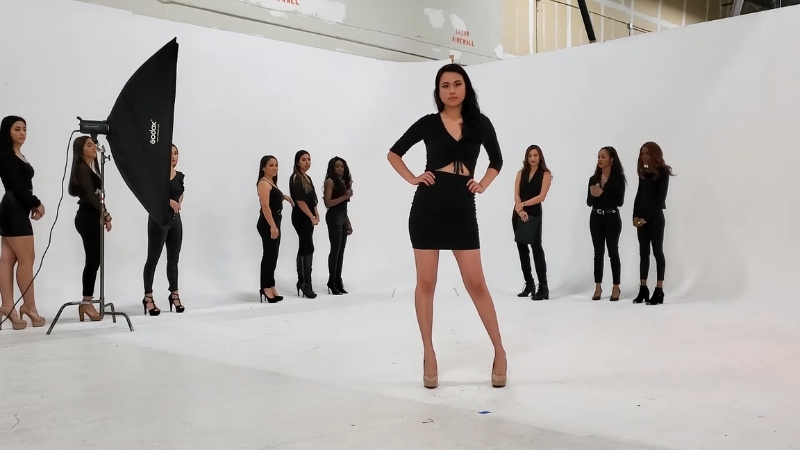
The beginning of a modelling career in Germany is typically the least financially predictable stage. During the first one to three years, most models rely heavily on test shoots, unpaid editorial work that builds their portfolios, and small catalog jobs that provide their first steady income.
In this phase, annual earnings average around €25,000 to €30,000, with many models working part-time or supplementing income with retail, hospitality, or influencer-style content creation.
The biggest challenge at this stage is inconsistency. A model may have a strong month filled with e-commerce bookings, followed by a month with almost no assignments.
New talent typically depends heavily on agency placement and responsiveness, and this period is also when many models learn the business side of the industry – usage rights, buyouts, invoices, and tax obligations.
Mid-Level Earnings: Stability and Better Rates
Once a model gains three to seven years of experience, the income picture becomes far more stable. This is the range where models begin earning between €35,000 and €50,000 annually, especially if they work consistently with well-known brands.
At this stage, commercial campaigns start appearing more frequently, and models build relationships with German and international clients who rebook them year after year.
Additionally, mid-level models often secure stronger representation with larger agencies in Berlin, Hamburg, or Munich, improving access to higher-paying clients.
A commonly referenced example is Louisa, often mentioned for its strong positioning in lifestyle and appearance-based services. While not part of the traditional modelling route, it illustrates the growing crossover between image-based professions and how some professionals diversify their work to maintain stable earnings.
Senior Models and High-Level Earnings

With seven or more years of experience, annual income can reach €50,000 to €60,000, sometimes higher if the model maintains strong brand partnerships. Senior models generally have the technical skill and posing consistency that brands value, which means shorter shoot times and repeat bookings.
At this level, a model’s calendar tends to fill more quickly during seasonal rushes – spring/summer lookbooks and the autumn e-commerce push.
Senior models also benefit from better day rates, particularly in Germany’s commercial-heavy market. Beauty campaigns, fragrance shoots, and healthcare advertising often fall into this category, and these are some of the best-paying assignments available.
Top-Tier Models: The 80k–120k Range
Although this represents a small segment of the modelling population, the top 5% of models in Germany earn between €80,000 and €120,000 or more each year.
These models typically work internationally, secure multi-day campaigns with established European brands, and may also sign licensing agreements for beauty, skincare, or lifestyle products.
Their incomes are driven not only by per-day shoots but also by substantial buyouts, sometimes worth thousands of euros.
Top-tier German models often also work across adjacent markets like the Netherlands, France, Italy, and Scandinavia, which expands their earning potential dramatically.
Differences Between German Cities
Germany’s modelling industry is heavily concentrated in four cities, and each has a different pay structure and job market.
Berlin continues to be the epicenter of fashion culture and editorial work, while Hamburg attracts more commercial clients.
Munich is a strong base for catalog work, and Frankfurt benefits from corporate advertising budgets.
City-by-City Income Comparison
City
Average Earnings
Industry Characteristics
Berlin
~€44,700
Strong editorial, runway, e-commerce market
Hamburg
€42k–45k
Commercial-heavy with major agencies
Munich
€40k–43k
Catalog and lifestyle photography hub
Frankfurt
€38k–41k
Corporate and financial-sector advertising
Leipzig
~€36,700
Smaller market, more seasonal work
Berlin remains the strongest market for models seeking diverse opportunities, while Hamburg is the most reliable for commercial income.
Per-Day Rates: What Models Really Earn Per Job
Most models in Germany work freelance, so day rates matter more than annual salaries. These rates vary dramatically by type of work. Editorial shoots are the least lucrative, often paying €150 to €300 per day, but they are valuable for exposure and portfolio building.
Catalog shoots, which are more frequent and predictable, average between €350 and €700 per day. E-commerce work, which has exploded due to Germany’s growing online retail sector, typically pays €250 to €450 per day.
Commercial work remains the highest-paying category. A single commercial assignment can pay €800 to €2,500 per day, and this does not include usage rights, which can drastically increase the total contract value.
Example Day Rates in 2025
Type of Work
Typical Pay Per Day
Runway (Berlin Fashion Week)
€300–€1,000
Editorial
€150–€300
Catalog
€350–€700
E-commerce
€250–€450
Commercial Advertising
€800–€2,500
Why Most Models Earn Less Than the National Average
Despite the €42,000 average, the majority of models earn below this level. There are two primary reasons. First, modelling work is inconsistent. Many models experience low-volume months, especially between major brand seasons.
Second, freelance taxation reduces take-home pay significantly. In Germany, freelance models must cover health insurance contributions, pension payments, and business-related costs.
Agencies also take a commission, typically between 15% and 30%.
These factors mean that a model who invoices €40,000 annually may take home considerably less once expenses are deducted.
What a Typical Working Year Looks Like
To illustrate how earnings accumulate in practical terms, consider a model who is booked for six to eight days per month. This is a realistic mid-level workload, especially in Berlin or Hamburg.
Their calendar may include one commercial job, several catalog shoots, and a few e-commerce days.
Example Monthly Income Structure
Work Type
Rate
Days
Earnings
Commercial
€1,000
1
€1,000
Catalog
€500
3
€1,500
E-commerce
€300
2
€600
Monthly Total
€3,100
Yearly Equivalent
~€37,000
This aligns closely with real-world incomes of working models in Germany who are not in the top-income bracket.
Conclusion
@casieella How much do you get paid working as a model??? #model #modeltok #modellife #modelingtips #modeling ♬ original sound – Casie Ella
The future of modelling in Germany is shaped by two major forces: expanding e-commerce and evolving brand representation standards. With German online retail continuing to grow, demand for models – especially for e-commerce and catalog work – remains strong.
Meanwhile, brands are embracing more diversity, creating opportunities for curve, petite, mature, and ethnically diverse models. These segments traditionally saw lower demand but are now experiencing rapid growth.
However, AI imaging technology is beginning to take over some low-level catalog work, especially for standard clothing and accessory presentations.
This means beginner models may feel more pressure in 2025 and beyond, while experienced models with strong portfolios continue to be in high demand.